


Australian Outback Birds
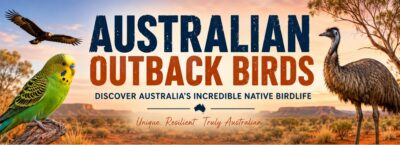
Australian Outback Birds: Australia’s Incredible Native Birdlife
Australia’s Outback is home to some of the world’s most fascinating birds. From vast deserts and open grasslands to ancient woodlands and semi-arid plains, these unique landscapes support hundreds of native bird species. Over millions of years, Australia’s birds have evolved to survive one of the harshest environments on Earth. As a result, the Australian Outback has become one of the world’s most remarkable destinations for birdwatching and wildlife enthusiasts.
Although many people picture the Outback as a dry and unforgiving landscape, it is actually a thriving ecosystem. After seasonal rainfall, native grasses burst into life, insects emerge in huge numbers, and waterholes attract birds from across the region. Consequently, the Outback transforms into a vibrant habitat filled with colour, movement and birdsong.
Among these remarkable species, one bird stands above the rest—the Australian budgerigar. While millions of people know budgies as friendly companion birds, far fewer realise they are completely native to Australia. In fact, wild budgerigars have perfected the art of surviving Australia’s unpredictable climate, making them one of the country’s most successful and recognisable native birds.
Whether you’re passionate about Australian native birds, planning a birdwatching adventure, or simply curious about the wildlife of the Australian Outback, this guide explores the incredible birds that call Australia’s inland regions home. Most importantly, it reveals why the Australian budgerigar remains one of the greatest symbols of resilience in the natural world.
What Are Australian Outback Birds?
Australian outback birds are native bird species that naturally inhabit Australia’s inland deserts, grasslands, shrublands and semi-arid regions. Unlike coastal birds or rainforest species, these birds have adapted to survive scorching summers, limited water supplies and unpredictable rainfall.
Instead of relying on stable environments, many outback birds constantly respond to changing conditions. Some travel enormous distances after rain, while others conserve energy during extended droughts. Together, these remarkable adaptations allow hundreds of species to flourish where many animals cannot.
Many Australian outback birds share several important characteristics, including:
- Excellent long-distance flying ability.
- Efficient water conservation.
- Diets based on native seeds, insects and vegetation.
- Strong flocking behaviour for protection.
- Flexible breeding cycles that respond to rainfall.
Because of these survival strategies, Australia’s inland birdlife is recognised as some of the most resilient anywhere in the world.
Why the Australian Outback Supports So Many Bird Species
At first glance, the Australian Outback may appear dry and lifeless. However, nothing could be further from the truth.
Instead, the Outback operates through dramatic natural cycles. Long dry periods are often followed by heavy rainfall, which quickly transforms the landscape. Native grasses begin producing seed, flowering plants bloom, insect populations explode, and temporary wetlands form across otherwise dry country.
As food becomes plentiful, bird populations increase rapidly. Seed-eating parrots, finches and pigeons gather in impressive numbers, while birds of prey follow in search of food. Consequently, Australia’s inland regions become one of the most productive bird habitats on the continent.
Several important ecosystems support Australian outback birds, including:
- Spinifex grasslands
- Mulga woodlands
- Acacia shrublands
- Dry river systems
- Salt lakes
- Native grass plains
- Open eucalyptus woodlands
Each habitat provides unique food sources and nesting opportunities. As a result, the Australian Outback supports an extraordinary diversity of native birdlife despite its challenging climate.
How Australian Outback Birds Have Adapted to Survive
Life in the Outback is demanding. Temperatures regularly exceed 40°C, water can disappear for months, and food supplies often change with the seasons. Nevertheless, Australia’s native birds have evolved remarkable ways to survive.
Many species remain highly mobile. Rather than staying in one location, they travel wherever conditions are most favourable. Others conserve energy during extreme heat by feeding early in the morning or later in the afternoon.
Some of the most impressive survival adaptations include:
Following Rain Instead of Seasons
Unlike birds that migrate along predictable routes, many Australian outback birds move wherever rainfall occurs. This flexible behaviour allows them to find fresh grass, insects and reliable water sources throughout the year.
Conserving Water
Water is one of the Outback’s most valuable resources. Therefore, many birds have evolved specialised kidneys that minimise water loss. Others obtain much of their moisture directly from food, reducing their dependence on permanent water sources.
Feeding Opportunistically
Australian outback birds rarely rely on just one type of food. Instead, many species switch between seeds, insects, flowers and native fruits depending on what becomes available.
Living in Flocks
Many parrots and finches live in large social groups. Not only do flocks improve protection from predators, but they also help birds locate food and water more efficiently.
Iconic Australian Outback Birds
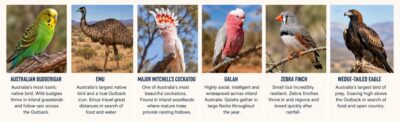
Australia’s inland regions support an extraordinary variety of bird species. While each bird contributes to the health of the ecosystem, several have become iconic symbols of the Australian Outback.
Australian Budgerigar (Melopsittacus undulatus)
The Australian budgerigar is undoubtedly one of the country’s most famous native birds. Although people around the world keep budgies as companion birds, every domestic budgie can trace its ancestry back to the wild budgerigars of inland Australia.
Wild budgerigars naturally inhabit grasslands, shrublands and semi-arid regions across mainland Australia. Their bright green and yellow plumage blends beautifully with native grasses, helping protect them from predators as they feed on the ground.
Unlike many birds, budgerigars are highly nomadic. Instead of remaining in one area, they travel enormous distances in search of fresh grass seed and reliable water. Following significant rainfall, thousands of budgerigars may gather into spectacular flocks that sweep across the Australian landscape.
Their intelligence, endurance and remarkable adaptability have helped them become one of Australia’s greatest wildlife success stories.
Emu
Standing up to two metres tall, the emu is Australia’s largest native bird and the second-largest bird in the world. Although it cannot fly, it more than compensates with incredible speed and endurance.
Emus regularly travel vast distances across the Outback while searching for food and water. They feed on native plants, seeds, fruits and insects, allowing them to adapt to changing environmental conditions throughout the year.
Beyond their ecological importance, emus also hold deep cultural significance for many Aboriginal and Torres Strait Islander peoples. Today, they remain one of Australia’s most recognisable wildlife icons.
Wedge-tailed Eagle
Few birds command as much respect as the wedge-tailed eagle. As Australia’s largest bird of prey, it dominates the skies above the Outback with an impressive wingspan that can exceed 2.5 metres.
These powerful raptors hunt rabbits, reptiles, small mammals and birds while also feeding on carrion. Consequently, they play a vital role in maintaining healthy ecosystems throughout inland Australia.
Their soaring flight and commanding presence make them one of the most unforgettable birds to encounter in the wild.
Galah
The galah is one of Australia’s best-known parrots. Its striking pink chest, soft grey wings and playful personality make it instantly recognisable.
Galahs thrive throughout much of inland Australia, particularly in open grasslands, farming regions and woodlands. Because they are highly social, they often gather in large flocks, creating spectacular displays as they feed or fly together.
Furthermore, galahs have adapted exceptionally well to changing landscapes, allowing them to remain one of Australia’s most widespread parrots.
Cockatiel
Although cockatiels are popular pets around the world, they are also native to Australia’s inland regions.
Wild cockatiels inhabit dry grasslands and open woodlands, where they feed mainly on grass seeds. Like budgerigars, they move frequently in response to rainfall and changing food supplies.
Their elegant crest, long tail and graceful flight make them one of the most distinctive parrots found throughout the Australian Outback.
Zebra Finch
Small in size but incredibly resilient, the zebra finch is one of Australia’s most successful desert birds.
These energetic birds survive in some of the driest parts of the continent by breeding rapidly whenever favourable conditions occur. After rainfall, zebra finch populations can expand quickly thanks to abundant food and nesting opportunities.
Because of their adaptability, zebra finches have become a favourite species among birdwatchers and wildlife researchers alike.
Australian Ringneck
The Australian ringneck is another colourful native parrot commonly found throughout inland Australia.
Unlike some parrots that specialise in one habitat, ringnecks thrive across woodlands, grasslands and agricultural areas. They feed on seeds, blossoms, fruits and native vegetation, making them highly adaptable to changing environments.
Their loud calls and vibrant plumage ensure they are rarely overlooked when exploring Australia’s Outback.
Major Mitchell’s Cockatoo
Often regarded as one of Australia’s most beautiful parrots, Major Mitchell’s cockatoo is instantly recognised by its spectacular pink-and-white crest.
Although these birds prefer lightly wooded inland regions, they rely on mature trees for nesting hollows. Therefore, protecting native habitats remains essential for their long-term survival.
When seen flying across the red Australian landscape, Major Mitchell’s cockatoos create one of the Outback’s most breathtaking wildlife spectacles.
Why the Australian Budgerigar Is the Ultimate Outback Survivor
Among all Australian outback birds, the budgerigar stands out as one of nature’s greatest survival specialists. While many native birds have adapted to Australia’s harsh inland conditions, few match the budgerigar’s ability to thrive in an ever-changing environment.
Unlike birds that rely on permanent habitats, wild budgerigars constantly respond to the landscape around them. They follow rainfall, seek out fresh grass seed and move quickly whenever conditions begin to deteriorate. As a result, they have successfully inhabited Australia’s arid and semi-arid regions for thousands of years.
Their remarkable resilience has not only ensured their survival but has also made them one of Australia’s most recognised native bird species.
Built for Life in the Australian Outback
Every aspect of the wild budgerigar has evolved to suit life in inland Australia.
Rather than competing for limited resources in one location, budgerigars remain highly mobile. This flexibility allows them to take advantage of short periods of abundance before conditions become harsh again.
Wild budgerigars survive by:
- Feeding primarily on native grass seeds.
- Travelling long distances between food and water.
- Breeding rapidly after significant rainfall.
- Flying in coordinated flocks for protection.
- Remaining constantly alert to predators.
Together, these survival strategies allow budgerigars to flourish in environments where many other bird species would struggle.
Nomadic Rather Than Migratory
One of the most fascinating characteristics of wild budgerigars is their nomadic lifestyle.
Unlike migratory birds that follow the same routes every year, budgerigars travel wherever rainfall creates favourable conditions. Consequently, their movements constantly change depending on the availability of food and water.
Following heavy rain, previously dry grasslands quickly produce fresh seed. Budgerigars respond almost immediately, often arriving in huge numbers to take advantage of the temporary food supply.
This remarkable behaviour has fascinated birdwatchers and researchers for decades. In fact, witnessing thousands of wild budgerigars flying together across the Australian Outback is considered one of Australia’s greatest wildlife experiences.
Life in Massive Flocks
Budgerigars are among Australia’s most social native birds.
Although small family groups are common, favourable conditions can produce enormous flocks containing thousands of birds. These spectacular gatherings offer several important advantages.
First, large flocks provide greater protection from predators such as falcons and hawks. Secondly, they improve the chances of locating fresh food and water. Finally, flocking allows birds to communicate quickly whenever conditions change.
Watching a flock of wild budgerigars twist and turn through the sky is both breathtaking and highly effective. Their coordinated movements confuse predators while demonstrating the remarkable intelligence of these small parrots.
What Do Wild Budgerigars Eat?
Food availability plays a vital role in the survival of every outback bird. Fortunately, budgerigars are perfectly adapted to Australia’s natural grasslands.
Their diet consists mainly of:
- Native grass seeds
- Fresh grass shoots
- Seasonal herbs
- Occasionally small insects and larvae
Because native grasses respond rapidly to rainfall, budgerigars closely follow changing weather patterns. Consequently, food shortages rarely last long if birds can continue moving across the landscape.
This ability to track natural food sources has been one of the keys to their long-term success.
Wild Budgerigars vs Domestic Budgies
Although domestic budgies share the same ancestry as wild Australian budgerigars, selective breeding has produced noticeable differences over many generations.
| Feature | Wild Australian Budgerigar | Domestic Budgie |
|---|---|---|
| Natural colour | Green and yellow | Blue, white, yellow, violet and many other colours |
| Size | Smaller and leaner | Generally larger |
| Habitat | Australian Outback | Homes and aviaries |
| Lifestyle | Survival-focused | Human care |
| Behaviour | Highly nomadic | Social, curious and trainable |
| Flight | Long-distance endurance | Limited to aviary or indoor spaces |
Despite these differences, every companion budgie still shares the remarkable instincts that helped its wild ancestors survive Australia’s challenging landscapes.
Other Remarkable Birds of Australia’s Outback
While the budgerigar remains one of Australia’s most iconic native birds, it shares the Outback with many equally fascinating species.
Some of the most recognisable include:
- Little Corella – A highly intelligent white cockatoo that often gathers in noisy flocks.
- Crimson Chat – A colourful small bird commonly found in arid grasslands after rainfall.
- Mulga Parrot – A beautiful inland parrot known for its calm nature and vibrant plumage.
- Australian Kestrel – A skilled hunter that hovers above open country searching for insects and small reptiles.
- Inland Thornbill – A tiny insect-eating bird well adapted to dry shrublands.
- Black Falcon – One of Australia’s fastest birds of prey, perfectly suited to open landscapes.
Together, these species highlight the incredible diversity of Australia’s inland birdlife.
Why Australian Outback Birds Matter
Australian outback birds play an essential role in maintaining healthy ecosystems.
As they move across the landscape, they disperse native seeds, pollinate flowering plants and help control insect populations. Birds of prey also regulate populations of rodents and other small animals, creating a balanced ecosystem.
Furthermore, healthy bird populations often indicate healthy landscapes. For this reason, protecting Australia’s native habitats benefits not only birds but countless other wildlife species as well.
Conservation efforts continue to focus on preserving native grasslands, woodlands and water sources so future generations can enjoy Australia’s extraordinary birdlife.
Best Places to See Australian Outback Birds
Australia offers countless opportunities to observe native birds in their natural habitat. However, some locations are particularly well known for their incredible birdlife.
Popular birdwatching destinations include:
- Alice Springs – A gateway to central Australia’s unique bird species.
- Simpson Desert – Home to budgerigars, zebra finches, chats and birds of prey.
- Flinders Ranges – Excellent for parrots, cockatoos and wedge-tailed eagles.
- Lake Eyre (Kati Thanda-Lake Eyre) – Following rainfall, this region attracts spectacular numbers of waterbirds and inland species.
- Sturt National Park – One of Australia’s premier destinations for observing native desert birds.
- Mungo National Park – Offers excellent opportunities to spot parrots, emus and raptors.
For birdwatchers hoping to see wild budgerigars, timing is everything. Because these birds follow rainfall, their movements vary from year to year. Nevertheless, witnessing a flock of wild budgerigars in the Australian Outback remains an unforgettable experience.
Frequently Asked Questions
What birds live in the Australian Outback?
The Australian Outback is home to hundreds of native bird species, including budgerigars, emus, wedge-tailed eagles, galahs, cockatiels, zebra finches, Australian ringnecks, Major Mitchell’s cockatoos, little corellas and many more.
Are budgerigars native to Australia?
Yes. Budgerigars are completely native to mainland Australia and occur naturally throughout inland grasslands, shrublands and semi-arid regions.
Why do wild budgerigars travel in huge flocks?
Wild budgerigars form large flocks to improve protection from predators, locate food more efficiently and find reliable water sources after rainfall.
What do Australian outback birds eat?
Their diets vary depending on the species. However, many outback birds feed on native grass seeds, insects, flowers, fruits and small animals that become available throughout the year.
Which Australian bird is best adapted to desert life?
Several species have evolved to thrive in Australia’s deserts, including the budgerigar, zebra finch, cockatiel and wedge-tailed eagle. Each has developed unique behaviours that allow it to survive extreme heat and limited water.
Where can I see wild budgerigars?
Wild budgerigars are most commonly seen throughout inland Australia following periods of good rainfall. Grasslands, semi-arid plains and open woodlands provide ideal habitat.
Why are Australian birds so colourful?
Many Australian birds display vibrant colours for communication, courtship and species recognition. Additionally, their colourful plumage has evolved over millions of years in Australia’s unique environments.
Final Thoughts
Australia’s Outback is one of the world’s most extraordinary environments, and its birdlife is equally remarkable. From towering emus and majestic wedge-tailed eagles to colourful parrots and energetic finches, every species has evolved unique ways to survive the challenges of inland Australia.
Among them all, the Australian budgerigar remains a true icon. Its intelligence, resilience and ability to thrive in one of the harshest environments on Earth have earned it a special place in Australia’s natural history. Furthermore, its journey from the vast Australian Outback to homes around the world has made it one of the planet’s most beloved companion birds.
At Budgerigar People, we’re passionate about celebrating these incredible native birds. Whether you’re learning about wild budgerigars for the first time, researching Australian outback birds, or already share your life with a pet budgie, understanding their natural origins offers a deeper appreciation of just how extraordinary they truly are.
After all, every budgie has a story—and that story begins in the heart of the Australian Outback.